How often do you use an immobilizer after ACL reconstruction?  The January 2009  issue of American Journal of Sports Medicine is out and there a few interesting articles I wanted to feature.  The first of which discusses the use of knee bracing and immobilization postoperatively following ACL reconstruction using a hamstring tendon graft

The Use of Postoperative Bracing Following ACL Reconstruction

DSC01582In this study, 82 patients were randomized into two groups: 1) a group of patients that wore an unhinged knee immobilizer and 2) a control group that did not use a brace.  At 2 week postoperatively, the authors report that there were no differences between groups for pain, medications consumed, complications, and range of motion.

The authors conclude that an unhinged postoperative knee brace is not recommended following ACL reconstruction for the purpose of pain control.  That is the exact phrasing that was used.  The last part of the sentence is significant, “for the purpose of pain control.”  The paper is centered around pain control more than any other variable, it is even in the title of the paper.


Methodological Issues

There are a couple of methodological flaws that I found that are likely significant in the presentation of the results

  • Compliance for brace use was extremely low and only documented by subjective reports.  Only 86% of subjects in the immobilizer reported wearing their brace from day 7-13 and by day 14 only 26% of subjects reported wearing their brace as instructed.  Since this is only self-reported, you can assume that these numbers are best-case scenario as I wouldn't be surprised if a few subjects were not completely honest.  Regardless, taking these numbers into consideration, you can argue that the brace group consisted of only 11 patients and the non-brace group had 73 subjects.  Not sure that this low of compliance can lead to a good comparison.
  • All of the patients were on pain medication consisting of either Percocet or Tylenol with codeine and naproxen.  As previously mentioned, pain scales were of primary importance to the authors in the discussion section of the paper.  However, it appears that pain was controlled with pharmaceuticals and likely has no correlation to brace use.


Clinical Implications

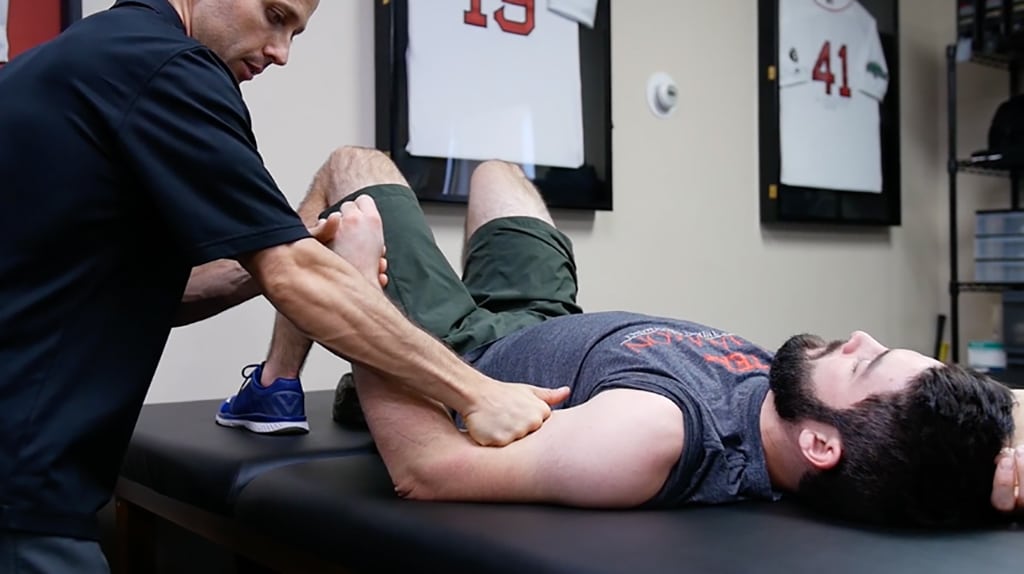
I am not sure that based on the results of this study, my choice to use a brace or not following ACL reconstruction will be influenced.  Clinically, I have always used a postoperative knee brace following ACL reconstruction, though have always used a drop-lock hinged knee brace.  This allows the patient to have the knee free to move throughout the day, however can lock the brace into full knee extension during ambulation.DSC00996

While I feel that this is helpful for stability and protection of the knee postoperatively, these are not the reasons why I use a brace.  For me, it is for a much more simplistic reason:

The quadriceps are susceptible to reflexive inhibition due to the pain and effusion associated with surgery. 

Ambulating without full volitional control of the quadriceps encourages improper gait and makes the limb susceptible to “giving-way episodes” and potential harm.

The brace is utilized for the first 7-21 days depending on the patient and their ability to restore volitional control of the quad.  Many factors will affect the duration of the brace use, including patient selection, age, and previous activity level.  For example, an athlete that has an acute ACL reconstruction will likely restore their volitional control sooner than an older, sedentary patient.  The key is to assess and individualize.

Another interesting fact that I took from this paper really has nothing to do with the topic of the study, but nevertheless was interesting to me.  Look at the progression of reported pain on a VAS over the course of two weeks:

1 hour postoperatively 20.0-20.8
Day 0 PM 29.3-30.8
Day 1 AM 28.7-34.1
Day 1 PM 41.9-45.5
Day 2 AM 35.1-40.8
Day 2 PM 32.6-35.2
Day 7 27.5-29.3
Day 14 12.9-14.1

Pain appears to peak at 36 hours after surgery and remain high day 1 and day 2 postoperatively before gradually decreasing to a fairly tolerable level by week 14.  This is important information for clinicians and patients.  When I see a patient immediately postoperatively, I commonly tell them that the first few days are the worst and that it is not uncommon to feel worse days 2 or day 3.  This helps assure them that they have not reinjured themselves when pain worsens.

This is also helpful regarding pain’s role in the inhibition of the quadriceps.  Based on these numbers, it wouldn’t surprise me if a patient was having difficulty with volitional control of the quadriceps 1 week after surgery despite appropriate rehabilitation.  If you were using a brace for this reason, as I suggest above, it looks like day 7 may be too early to discharge the brace and that 2 weeks may be more appropriate for many patients.

Food for thought either way I guess.  How common do you use brace immediately after ACL reconstruction?  What is the duration?  What is your reasoning?  Would love to hear what other centers are doing.

L. A. Hiemstra, S. M. Heard, T. M. Sasyniuk, G. L. Buchko, J. G. Reed, B. J. Monteleone (2008). Knee Immobilization for Pain Control After a Hamstring Tendon Anterior Cruciate Ligament Reconstruction: A Randomized Clinical Trial The American Journal of Sports Medicine, 37 (1), 56-64 DOI: 10.1177/0363546508322896

To continue my recommendations of the best home exercise and workout programs for your New Year’s resolutions, no program is complete without the proper equipment.  If you haven’t read my post on the best home workouts, there is some information on recommended programs that you can follow at home.  This post will overview some of the best home gym equipment to supplement these programs This is another area of interest to me as I often use many of these tools everyday with my patients and athletes, as well as for my own personal fitness.  All of these products are excellent for the home gym, and to be honest with you, could very well be the best home gym equipment currently available.  The biggest benefit for me is that you do not need stacks of weights or a giant machine system, all you need is a very little amount of closet or basement space to store the equipment.


Home Fitness Equipment


Perfect Push Up

I was a little skeptical at first, thinking that the Perfect Push Up wasn’t really that exciting and that it would offer minimal advantages over just doing a push up on the ground.  I was wrong.  A strength coach I work with actually bought a couple of these and we travel with them for all of our athletes to use.  The Perfect Push is really good and makes a push up far more valuable by adding the dynamic component of internal rotation as you extend your arms.  This is results in a great burn in your pecs and a much better workout.  I don’t follow the Navy Seal program that is touted and included, I just use them to enhance my push ups in my workouts.  I use them for standard, wide grip, narrow grip, declines, and any other variation of a push-up you can imagine.  You’ll be able to do a few less reps as you will be working your chest much better, but it will improve with time as you get stronger.

Since the push up exercise is such an extremely valuable and easy to use exercise for your chest, it is a component of many programs, such as the P90X program I previously talked about.  In the P90X program, they recommend standard push-up bars, but if you are going to spend the $20, might as well upgrade to the Perfect Push Up for $10 more.  You won’t regret it.  They also have a small travel version, but for me the original feels better, and they are portable enough for me.

I trust Amazon’s review system, which is why I often refer to it, but the Perfect Push Up is rated at 4.5/5 stars by well over 400 people, that is excellent!  There are a lot of good technique videos on Youtube, but here is a good demonstration:


Iron Gym

The two main components to any home workout or exercise program are push ups and pull ups.  These exercise hit a large amount of muscle groups all in one and can be performed with many grip, arm, and body variations to work different areas of your body.  I have always hated pull-up bars and other doorway devices as they seem to not be sturdy or need permanent attachment to a door frame.  This includes the Perfect Pull Up from the makers of the Perfect Push Up.  That really does look like a neat product, but I just do not want to attach it to my doorframe.

Then came the Iron Gym.  This bar attaches to your door frame using a counterpoint system to attach easily and come right down with no installation.  You put it up, do your exercises and take it right down.  I was again skeptical and did a lot of research on this and you probably have the same questions I did, but YES, it can easily hold your weight, and NO, it will not damage your doorframe. 

Again, pull-ups are a huge part of programs like P90X, so you will need something like this.  The variety of different grips positions also makes this very versatile.  There are others on the market but I just liked this one better and have enjoyed using it.  Just realize that the other uses they claim on the infomercial are not realistic.  If you try to use the bar for sit-ups it is OK, but you can likely find something better to put your feet under around the house.  As far as the triceps dips go, if doing a 1-2 inch dip is a workout for you, then you will love it, otherwise it doesn't even come close!  But, the Iron Gym best chin-up bar on the market in my mind. 

The Iron Gym is rated at 4.5/5 stars by 140 people on Amazon, that is great.  WORDS OF ADVICE: Please trust me when I say, DO NOT buy them from the official Iron Gym website.  They did a terrible job with marketing on this and use all the up-sell scams they can think of, next thing you know there are several pop-up ads and you bought a few other items and paid for expedited shipping, otherwise they just hold your order for 2 weeks before shipping!  I would strongly recommend buying the Iron Gym from Amazon.

Here is a clip of the infomercial, notice how quick and easy it is to attach:


Resistance Bands

You can actually get a very good workout with resistance bands, but if you are familiar with the physical therapy type elastic bands like TheraBand, these will not work as the resistance is too light and the quality is poor.  Those bands are made to be cheap and quick, cut off a piece from a big box and you have a great disposable home exercise band.

But if you are actually working out at home for any sort of strength gain, you will need real resistance bands.  The makers of P90X make a set of exercise bands but I haven’t tried them.  I just use basic bands from Perform Better.  Much cheaper and a large variety of resistance.  I use the Lifeline bands with handles.  They are of good quality and there is a nice chart and scale to help you determine the resistance, but it is a personal choice.  I recommend buying the whole set as you can use it then for any exercise as you continue to gain strength.  There are 10 in the set and if you buy 3 you get 1 free, so might as well get at least 4!


Bowflex SelectTech Weight Systems

There comes a point in anyone’s home workout program where the resistance bands may get a little too basic.  You certainly don’t want to buy a whole set of weights, or worse, just buy a few and be stuck with those weights.  These will take up a lot of wasted space in your house for no reason.

Or you could buy an integrated set, like the Bowflex Select Tech weight system.  These are the new cream of the crop, but the classic Powerblocks are still good too.  The two are interchangeable in my mind.  I have a couple of sets of Powerblocks that have broken (which causes quite the safety concern) but we travel with them in large equipment trunks so there is excessive wear, probably be fine for just straight home use.

Do your self a huge favor if you have the space and buy the stand, makes it much easier.  I don’t have the stand at home and hate lugging them out of the closet every time.  Also, there are two varieties, a light one and a heavy one:

Check out how cool these are in this video:


Bowflex Revolution FT Home Gym

In an effort to be thorough, the supreme home gym equipment right now if the Bowflex Revolution FT Home Gym.  If you have this much room in your house, good for you, I recommend this machine (and I doubt you live in an 80 year old colonial in New England…).  But I realize this is unrealistic for most, so stick to the above mentioned items.  Bowflex actually sent us one of their home gyms at ASMI to test it biomechanical, they are great machines.  Wish I had the room.


Core and Abdominal Equipment

I do not really think you need to go crazy in this department.  The core is really supposed to stabilize using isometric contractions while performing extremity movements or produce rotary movements, so most of ab work is eye-wash.  I would recommend a good Swiss or Physio ball to perform some of your abdominal work.  Alternatively you can use a Bosu ball, which has added benefits of being able to balance with it during leg exercises too.  I wrote about the advantages of a Bosu in the past. 

It might also be a good idea to get a medicine ball or two, may something in the 5-7.5 pound range and 10-15 pound range.  This can be used for resistance as well as some plyometrics against a hard wall.  Because of this I recommend a ball that bounces well, such as the the First Place Elite Medicine Balls that I use everyday.


Yoga Equipment

Any good yoga program needs the right equipment.  Luckily, this is simple and cheap to obtain these items:


Supplements

Nutrition is a big part of any home workout program, and will certainly help you achieve your goals.  Review my past post on some of the best home workouts that have associate diets, such as P90X or my favorite, The Abs Diet

In regard to supplements, you should consult your physician before taking anything.  Also, I would only recommend supplements certified by the NSF to be clean of agents such as stimulants.  I would also recommend you read up on this info to learn as much as you can, Men’s Health has many tips and books on this topic.  As an example, here is what I commonly recommend to patients and athletes, may not work for you:

  • A good multivitamin.  I personally use Centrum Performance.  I have tried the GNC MegaMan brand and was disappointed.  Save your money.
  • Protein.  A huge part of your supplementation right after your workout to bath your muscles in reparative protein.  I recommend EAS products such as the mix packets or if you are lazy like me the premade drinks, strawberry is my favorite.  Careful with protein shakes, many are loaded with fat (such as Muscle Milk, that is why it tastes so good!) or sugar (such as Gatorade Shakes, again that is why they taste so good!).  The EAS shakes taste fine, I wouldn’t call them a delight but they are not awful.
  • Creatine – Popular but I never liked it due to dehydration side effects.  I recommend EAS’s Phosphagen.
  • Muscle Armor – a post-workout supplement by EAS of amino acids to aid in muscle recovery.  Loaded with Glutamine.
  • gHP Sport – This is the future of supplementation.  gHP Sport is a blend of amino acids to be taken at night before bed that are designed to increase your body’s ability to repair and regenerate.  Go to the web page for more information, I do not want to seem like I am recommended their claims.  I started taking these this summer and immediately felt better, awaking with more energy and less stiffness.  Many professional athletes are using this, especially since it is NSF certified.  I sleep like a rock with them and many people say they sleep so well that they even intense dreams!  We need to learn more about why it works, but it really does.


I hope this information was useful and at the very least, puts you in the right direction to continue your research into what the best home workout programs and exercise equipment are for you.  As always, I welcome comments on these products if you have tried them, or any other suggestions for this list. 

Don’t forget to also read my post on the best home exercise programs and workouts to supplement these programs.  Good luck with the New Year’s Resolution!

 best-home-exercise 

This week I will focus on everyone’s favorite topic of the moment – home exercise programs and home fitness equipment – just in time for New Year’s resolutions!  I was going to write this post awhile back but thought it would be better suited for this week.  I have put together a list of my favorite home exercise equipment and programs after years of trying many out myself.  Be sure to also read my post on the best home workout equipment.

I enjoy this area of fitness and strength and conditioning, both personally and professionally.  Not only do I research these topics for recommendations to my athletes and patients, but also for myself.  I am a sucker for the infomercial product (who doesn’t want a Magic Bullet or Shamwow!?!) but, don’t be afraid of gimmicks or scams, I personally recommend everything on this list and if you know me at all, you know that I put a lot of research into these products before trying.

Before I begin, some disclaimers!

  • I am not recommending these programs for everyone, consult with your physician before starting any exercise, nutrition, or supplementation program.
  • None of these home exercise programs or equipment will give you a rock hard 6-pack or a chiseled chest.  Lets be realistic here, don’t fall for the hype.  These are very good programs and equipment that COULD help you obtain these goals if you stick to a very strict diet and nutrition plan. 
  • In an attempt to not alienate my strength & conditioning readers, I do want to say that working out with a partner, fitness expert, or strength & conditioning specialist is always more ideal than an unsupervised home exercise program.  But I also understand the busy lifestyle of some people, especially those that travel for work.
  • The goal of these posts is to provide you recommendations on what I have used and would recommend to get a great workout, loose some weight, get in shape, and increase your overall health.


The Best Home Exercise and Workout Programs


P90X

There has never been a home workout program like this before.  Trust me when I say that you will immediately cancel your gym membership when you see how good of a workout you can actually achieve at home with P90X, especially when you have limited time to squeeze in a workout.  The last thing I want to do is waste time commuting to a gym.

I first saw this on an infomercial, and since I tend to watch TV at odd times, as do all my co-workers, we saw this infomercial at least twice a day all summer.  In all honesty, this is by far the best and most comprehensive home exercise program ever produce.  Designed and hosted by Tony Horton, the program contains 13 DVDs of various programs with a very detailed manual of the program and nutrition plan.  Tony seems great, but I must admit I often mute his instruction.  If you follow this program to the letter, I have no doubt you will be able to be one of those people with the before and after photos on the commercial. 

I personally could not follow the program as described.  The program has a 7-day routine of workouts ranging from 60-90 minutes in length.  I could just not make this much of a commitment.  But I still loved the program and love the workouts, many of which I have and will continue to incorporate into my athletes’ programs.  I just do them at my own pace and do not expect to see my abs any time soon.  The program is advanced and would work great for athletes, but also has variations to be able to include people just starting out with a home fitness program.

The concept of the P90X program is simple, yet highly effective, and involves what they call “muscle confusion.”  All that this means is that you will perform many different exercises for each muscle group and you will continuously change your program every month, rather than just performing the same old program.  This makes sense scientifically and did appeal to me psychologically.

The program has several DVDs for each muscle group, but what really sets it apart is they combination of many different areas of fitness, including DVDs on plyometrics, yoga, stretching, kenpo, and core.  My hands down favorite is the Cardio X program, which basically brings you through a high intensity combination of nonstop stretching, yoga, kenpo, plyometrics, and other moves to keep your heart rate up.

The P90X program has 70 reviews on Amazon with an average of 4.5/5 stars, that is pretty good, so it is not just me that loves the program!  I should note, careful buying this program used (or any other program).  I did this and was missing the book and 2 of the DVDs skipped.  I ended up just buying it again.  Be sure to get some of the equipment in my review of the best home workout equipment to get the most out of P90X.

Youtube is full of videos of P90X results.  Check out this video, love the fact that he is working out in the laundry room:


P90X Plus

If you are a graduate of the P90X program, P90X Plus is the continuation if you are looking for new workouts.  I wouldn't suggest this on it’s own, but if you are a fan of the original, this is a good addition.  5 more workouts on 4 DVDs.


10 Minute Trainer

This is a slimmed down version of workout programs, also designed by Tony Horton of P90X fame.  If you are really limited on time, this is the program for you.  Comes with 8 different workouts on 2 DVDs.  Also comes with all you need for home workouts or traveling with resistance bands, meal plans, and workout schedule.  Not bad for the truly busy person or if new to exercise, the 10-Minute Trainer Program is based on boasting your metabolism so you will see a benefit.


Yoga

I am a big fan of Yoga.  Flexibility and balance is great for athletes and people with a desk job.  I would bet that if everyone started performing yoga, there would be a large reduction in overuse injuries such as low back pain.

I am not the most flexible person, so I like DVDs designed for people like me, such as Yoga For Beginners and Yoga For Inflexible People.  I also follow the routine by Rodney Yee in AM and PM Yoga.  For advanced users, Rodney also has a total body workout yoga DVD called Power Yoga that is good, you can use it between your strength days with P90X.  Not sure why, but I like Rodney’s programs.

Here is the video introduction to AM/PM Yoga by Rodney Yee:


Core Performance

You may not know his name, but Mark Verstegan is the man behind the elite workout center for athletes in Arizona, Athlete’s Performance.  Lucky for people like you and I that don’t have million dollar salaries, Mark has shared his secrets with us through a series of books and DVDs in the Core Performance Series.  Great collection of information and workouts that will likely be new to you.  Mark takes the concepts of athletic function one step further in his programs and designs workouts that will allow you to not only look and feel better, but perform better.  Check out a few of my favorites from the series:

  • Core Performance: The original book that started it all, highly recommended.
  • Core Performance Essentials: There are no excuses for not working out with this stripped down, yet highly effective program for the busier type of person.
  • Core Performance Endurance: A new fitness and nutrition program for the endurance athlete or those just looking to slim and not gain bulk.
  • Core Performance Golf: A specific adaption of the principles of Core Performance designed to enhance your golf game.  Also has a nice Core Performance for Golf DVD that demonstrates the program.  The DVD is great and there are also variations for baseball and soccer.  These DVDs are excellent for the young athlete looking for a competitive advantage that the pros use.

Here is a video clip of Mark and one of his exercise progressions:


Abs Diet

The Abs Diet is actually anything but a diet, it is a concept, a life decision almost.  There is NO starving involved.  That is exactly what author David Zinczenko, the editor of Men’s Health Magazine, conveys in the beginning of the book.  He openly admits that the title was developed by the editors of the book and not himself.  I loved this tactic and believe he is sincere.  The book absolutely changed the way I think about food and how I eat.  Again, this is not a diet in anyway, it is nutritional education so that you can make educated decisions about what food to consume and why.  The book is packed with research studies, which really put it over the edge for me. 

The concept behind the Abs Diet book is to consume food that is 1) good for you, 2) will help you burn fat and eat less, 3) will help you put on muscle mass, 4) and will also reward you for many other health benefits. 

Image all those little nutrition tips over the years from Men’s Health put together into a specific nutrition plan.  The best part to me was that this was very easy to accomplish and keep up with.  I will warn you that he is a big fan of shakes, so but a Magic Bullet too (that thing is great, isn’t it?)!

Besides the nutritional information, the book actually is also built around a specific exercise concept that involves fast paced workouts with minimal breaks to keep your heart rate up.  The exercise routine is about 30 minutes in length, which is what I prefer.  This is basically the same principle as P90X so the two have gone really well together for me.  I combine the workouts of P90X with the nutrition and philosophy of the Abs Diet.  David also discusses cardio work and the negative gains in muscle size with too much cardio, really great information.  In addition, there are a ton of exercises and nutritional information, including recopies.

With the huge success of the book, there have been many spin offs, all of which I believe have been New York Times Bestsellers.  I like the books that discuss nutrition and recipes, and the DVD is valuable for the novice:

Here is a video clip from the workout DVD explaining it a little bit:


Maximum Strength

Maximum Strength is a 16-week program developed by Eric Cressey, who you may have heard me talk about before (his blog is in my blog roll).  I have really been impressed with Eric and his work after meeting him last spring.  You can find him all over the place speaking and writing for several magazines and websites.  Although already established, definitely will continue to develop a following.  I haven’t actually followed this program but intend to give it a shot after hearing people rave about it.  Maximum Strength has a 5 star rating with 14 reviews in Amazon, can’t beat that!


I hope that you find these suggestions helpful, I know that all of these products have worked for me and my busy lifestyle.  Does anyone have any experience with these programs as well?  What else would you recommend?

Don’t forget to also read my post on the best home exercise products to supplement these programs.

Happy Holidays

Tuesday, December 23, 2008 | 6 comments »

Wishing my readers and their families all the best this holiday season!  Thanks as always for reading and interacting!

Mike Reinold

downing

We are lucky to feature a guest post from Christie Downing, PT, DPT, cert MDT, ICLM.  Christie works at Alexian Brothers Rehabilitation Hospital in Elk Grove Village,  IL.  She specialize in musculoskeletal care as well as lymphedema management.  She is a MDT credentialed provider and student in the Diploma level of MDT, focusing primarily in MDT in both spine and extremity problems. 


Predicting Which Patients Will Not Respond to Physical Therapy

Now, I love my profession as much as the next PT, but I think I am realistic when I say that PT cannot fix everyone’s problems. I’ve come to realize that predicting positive outcomes of intervention is only one side of the coin, and that we must also be able to predict who will not respond to physical therapy. Often times, the medical community is not privy to such predictors and focus their attention simply on an imaging study or other medical test.

If you have been followed this blog, you will find my previous post about Mechanical Diagnosis and Therapy (MDT) and its ability to predict annular competence in the lumbar intervertebral disc. In MDT, we often focus on the predictive abilities of centralization in those with a derangement syndrome to indicate GOOD outcomes.  This has been shown in several articles, include some of my favorites listed in the below references.1,2,3,4,5 

However, a truly great therapist must also recognize when improvement by physical therapy just “isn’t in the cards.”

For those who practice MDT, this includes those with “irreducible derangement” which has specific diagnostic criteria for inclusion in this category. The predictive ability of failure to centralize in the irreducible derangement has exceptionally high predictors of chronic disability.3,6

Werneke and Hart showed this well in a study of 223 subjects with acute low back pain.  The authors assessed 23 different psychosocial, clinical, and demographic factors in an attempt to determine predictive values of chronic disability.  Of the 23 different variables, the strongest predictive variable to chronic low back pain and disability was noncentralization of pain.  This has been shown by Skytte et al as well.


Rapidly Reversible Low Back Pain

I’d like to pause for a moment and briefly discuss Rapidly Reversible Low Back Pain by Ronald Donelson, MD, MS. This was also Mike’s Book of the Week in the past.  In this book, Dr. Donelson critically examines our current state of diagnostic triage of those with low back pain. He takes a painfully realistic look at current practices and investigations among both the medical and allied health professions and highlights their shortcomings. Dr. Donelson has invested much time in investigating conservative care of low back pain and has taken a particular interest in MDT. So why does an orthopedic spine surgeon want anything to do with conservative care of low back pain? Well, you’ll have to read his book to understand the story about how he became acquainted with Greg Silva, PT, Dip. MDT. In my opinion, Dr. Donelson, in both his book and research,7 eludes to the notion that MDT clinicians have been able to help HIM better select patients for surgical intervention.

Imagine that, WE, as PTs, having valuable input as to the need for further intervention! 

Very little frustrates me more than when I feel that a patient will not benefit from further PT only to have the physician continually refer a patient back to physical therapy for the same pointless interventions. Surely, not everyone can be a Dr. Donelson. However, how ready is the medical community to hear our messages? 

Does this happen to you and what resistance have you faced when you predict a poor outcome?  Furthermore, what other pieces of evidence do we have that demonstrate strong predictive abilities for poor outcomes?  If anyone has predictors for poor outcomes of meniscal derangement and any other pathology, I would be particularly interested.

Note from Mike Reinold: Rapidly Reversible Low Back Pain is a great book that is highly recommended for those interested treating low back pain.  I was amazed at how simple, yet highly effective, the concepts are that are outlined in the book.  Definitely one of the best reads for treating low back pain for under $20!  Click here for more information or to purchase from Amazon.com.  Thanks Christie, great post!  If you are interested in guest writing for this website, please contact me.

References:

  1. Aina A, May S, Clare H; The centralization phenomenon of spinal symptoms - a systematic review Man Ther; Aug;9(3):134-143, 2004.
  2. Donelson R, Silva G, Murphy K.; Centralization phenomenon. Its usefulness in evaluating and treating referred pain. Spine; Mar;15(3):211-3, 1990.
  3. Skytte L, May S, Petersen P; Centralization: Its prognostic value in patients with referred symptoms and sciatica Spine; 30:E293-E299, 2005.
  4. Werneke M, Hart DL, Cook D; A descriptive study of the centralization phenomenon. A prospective analysis. Spine; Apr 1;24(7):676-83, 1999.
  5. Werneke M, Hart DL, Resnik L, Stratford PW, Reyes A; Centralization: prevalence and effect on treatment outcomes using a standardized operational definition and measurement method. J Orthop Sports Phys Ther; 38:116-125, 2008.
  6. Werneke M, Hart DL.; Centralization phenomenon as a prognostic factor for chronic low back pain and disability. Spine; Apr 1;26(7):758-65 , 2001.
  7. Wetzel T, Donelson R, : The role of repeated end-range/pain response assessment in the management of symptomatic lumbar discs. The Spine Journal; (3): 146-54, 2003.

Werneke M, Hart DL (2001). Centralization Phenomenon as a Prognostic Factor for Chronic Low Back Pain and Disability Spine, 26 (7), 758-764