
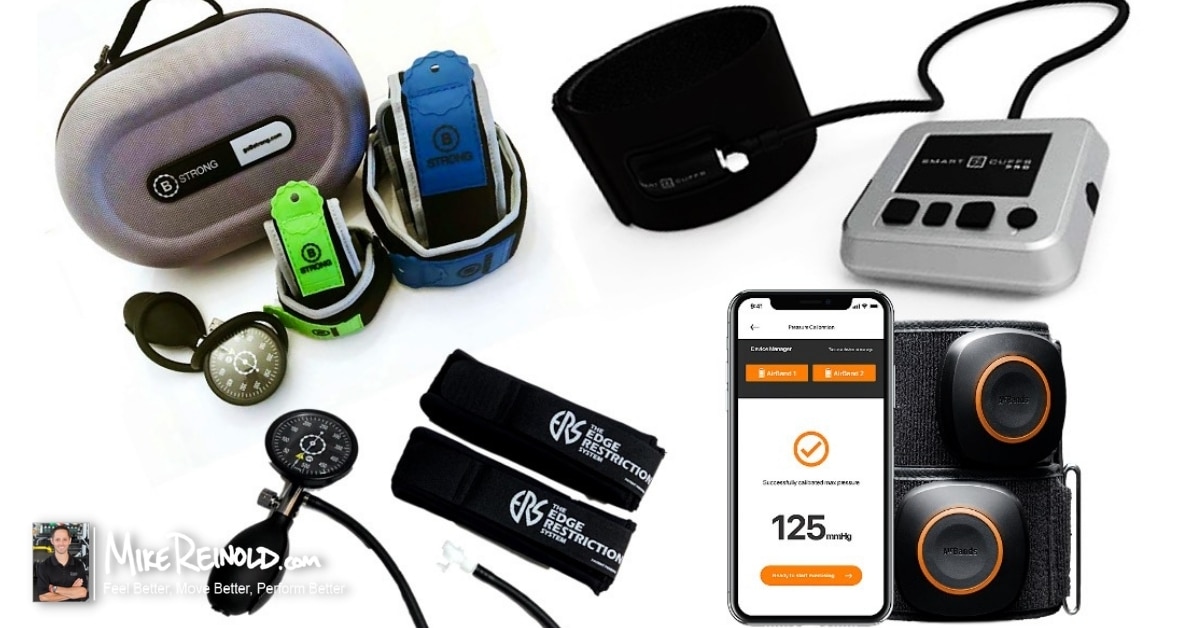

In this article, I will share the best blood flow restriction bands, cuffs, devices, and all the other equipment you’ll need to get started. I will help you figure out which BFR equipment is worth considering.
Over the years, I have tried many different BFR bands and BFR cuffs; some were great, and some were terrible.
Everything I recommend in this article is something I have tried and that we personally use every day at Champion. It’s not intended to be a complete list, as I am sure there are many other great BFR devices on the market.
Like everything else in life, you get what you pay for. However, there are many high-quality options for blood flow restriction devices to consider across various budgets and uses.
Keep reading to learn more about how to choose the best BFR bands, or click below to skip down to my recommended cuffs:
Blood Flow Restriction Training
Blood flow restriction training continues to grow in popularity. It’s no wonder, considering that the science of blood flow restriction training continues to show great results in enhancing strength and performance in a low-load environment. Using BFR bands and BFR cuffs to enhance strength with less loading makes blood flow restriction training a really exciting tool for injury rehabilitation, training, and sports performance.
As the popularity of BFR training continues to rise, we’re starting to see more and more blood flow restriction equipment come to market. We now have many options for BFR equipment, BFR bands, BFR cuffs, and other BFR devices.
Unfortunately, this has led to a ton of poor-quality BFR equipment.
If you want to learn more about blood flow restriction training, I have an entire BFR training online course where I discuss the science, applications, and various equipment options in much more detail.
How to Choose the Best Blood Flow Restriction Bands and Cuffs
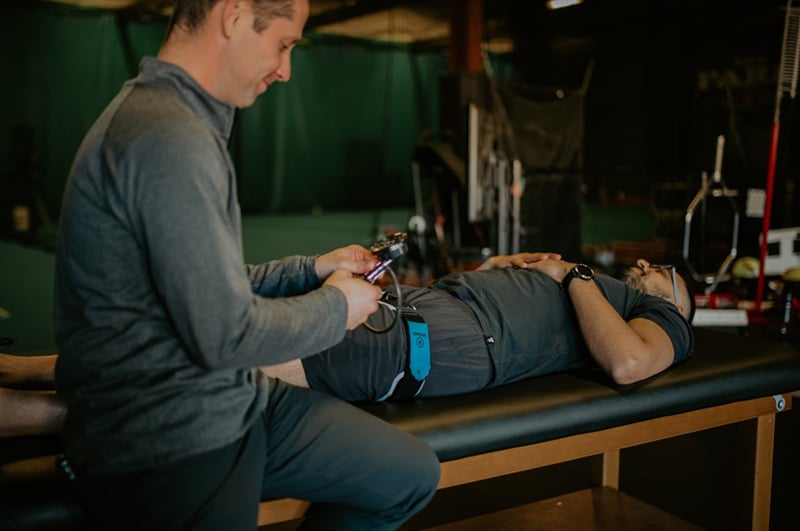
There are many factors to consider when choosing the best blood flow restriction bands and cuffs. Choosing the best BFR equipment will depend on how you intend to use the cuffs.
Will you be using them just for yourself? Are you a physical therapist looking to use blood flow restriction therapy with your patients? Are you a fitness professional looking to use it with a variety of clients? Do you plan on using them on both the upper and lower extremities?
These are all important things to consider when choosing the best blood flow restriction cuffs:
- The size and width of the cuffs
- The material of the cuff
- The durability of the cuff
- The mechanism of applying pressure
- The ability to accurately measure pressure
- The Cost of Blood Flow Restriction Cuffs
The Size and Width of the Cuffs
One of the first things I consider when choosing BFR equipment is the size and width of the cuffs.
This may seem obvious, but if you use the BFR cuffs exclusively for the upper or lower body, you’ll want to get a BFR cuff that is the right length. Many upper-body BFR cuffs are shorter and won’t be long enough to use around the leg.
But length isn’t the only factor.
The width of the cuff is also important and will affect comfort and the amount of pressure required. Narrow cuffs will require more pressure to be effective. This can often be less comfortable.
The Material of the Cuffs
Blood flow restriction cuffs come in a variety of materials.
Some are elastic, and some are rigid. If you want to measure pressure accurately, I prefer a rigid cuff.
Some are easy to clean and waterproof. This may be important if you plan on using the BFR cuffs on multiple people and need to clean and sanitize them.
The Durability of the Cuffs
The durability is often associated with the material of the cuffs. However, many people don’t realize that many of the BFR cuffs on the market now have poor durability.
If you find a really great deal on BFR bands or cuffs on Amazon, it’s probably too good to be true.
I’ve played with so many different BFR devices and have found that many of them have poor velcro, material that rips, or even valves that separate from the cuff.
I’ve wasted a decent amount of money trying some cheaper BFR cuffs that were of inferior quality.
The Mechanism of Applying Pressure
There are several ways to apply pressure during blood flow restriction training.
Most BFR straps apply pressure by simply tightening around the limb. You pull tighter to create more pressure.
Some BFR cuffs use air to inflate a cuff around the limb. You pump more air into the cuff to create more pressure.
While these two mechanisms may seem similar, I actually think this is one of the most important factors in choosing BFR devices.
I have no problem with people using BFR straps on themselves. This is very simple and effective at applying pressure.
However, I strongly recommend that you select a BFR cuff rather than a BFR strap so you can accurately measure the pressure applied.
The Ability to Accurately Measure Pressure
One of the most important factors in blood flow restriction training is the pressure applied. This is super important for both the effectiveness and safety of BFR.
If you want to be as safe and effective as possible when using BFR, you’ll want to measure pressure accurately.
If you want to be as consistent as possible and provide reliable results, you’ll want to measure BFR pressure accurately.
Measuring the pressure applied will help you determine the optimal limb occlusion pressure.
That is why I recommend pneumatic BFR cuffs that use air to inflate. Most of these include either a hand pump or an automated pump that measures the applied pressure, allowing you to set the specific limb occlusion pressure.
The Ability to Accurately Produce Occlusion
Measuring pressure is important, but considering how much occlusion the actual cuff produces may be even more important.
Occlusion percentage is the factor we should consider to reliably use blood flow restriction training with our patients and athletes.
This is why I have started to gravitate away from multi-chambered cuffs for most uses. These are cuffs with multiple air-compression chambers rather than a single solid chamber surrounding the limb.
There are pros and cons to this.
Multi-chambered cuffs have a reduced ability to provide full occlusion, which you could argue is safer for home use. But this is also a con. As recent research has shown, it’s difficult to measure the precise occlusion pressure with these multi-chamber cuffs.
The Cost of Blood Flow Restriction Cuffs
Last but certainly not least is the cost of blood flow restriction cuffs. While the phrase “you get what you pay for” comes to mind, I do think that there are a variety of different price points.
You do not have to use super-expensive equipment to get started with BFR. You can get BFR straps that cost as little as $10. I don’t want the cost of using BFR to be a factor that holds you back.
But you probably want to spend a little more to get a higher-quality BFR cuff.
Just like anything else, there are low-budget, middle-of-the-road, and high-end luxury options.
My Recommended BFR Bands and Equipment
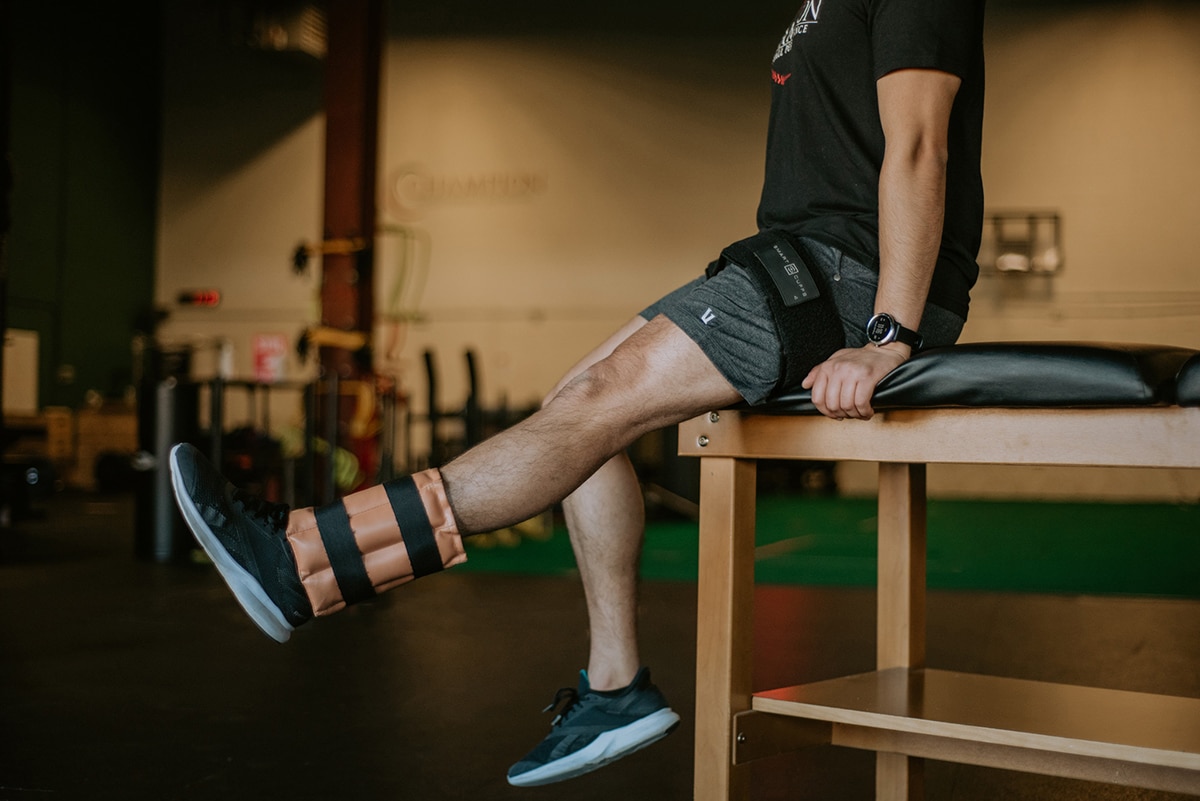
I’ve tried a ton of different BFR cuffs, bands, straps, and other equipment. Here are some of my favorites right now. I’m sure there are other great options out there, including some high-end premium options, but each of the below is something I personally have used and recommend in what I would consider a reasonable price range. I don’t think you can go wrong with any of these options.
- SmartCuffs BFR Cuffs
- Suji BFR Cuffs
- B Strong BFR Cuffs
- Airband BFR Cuffs
- Edge BFR Cuffs
I’m also very thankful to many of these companies for offering my readers a discount or coupon on their BFR cuffs. See below for more information on each.
SmartCuffs BFR Cuffs
First up is one of my current favorites among BFR cuffs, the Smart Cuffs by Smart Tools.
The original smart cuffs were good. They were very comfortable and had a hand pump to inflate the cuffs. The revised editions kept improving over the years.
But the newest 4.0 edition of the SmartCuffs is even better!
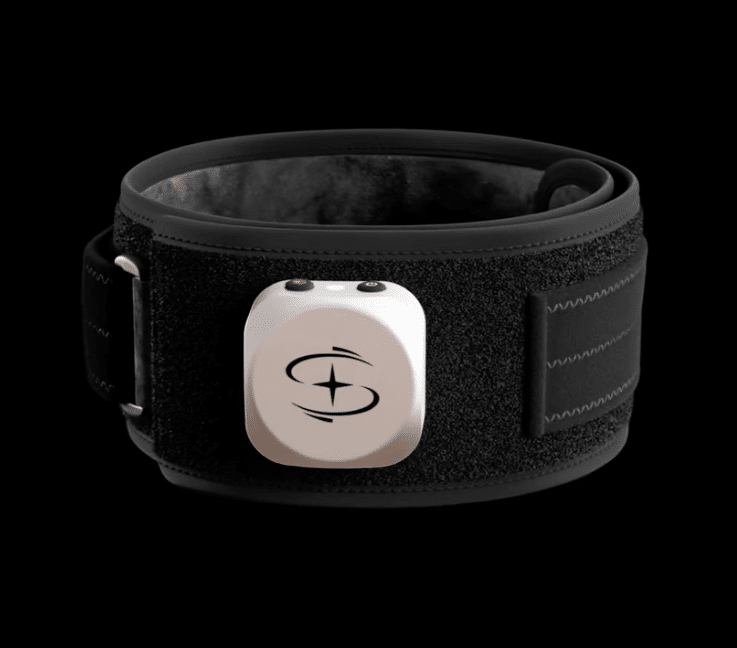
These cuffs come with an automated pump. The device automatically inflates, measures the occlusion pressure, and then inflates to a predetermined percentage of the limb occlusion pressure.
That’s amazing. And it works great. This was a feature you’d only find in the really expensive devices that cost thousands of dollars.
My clients also report that these are among the most comfortable bands to use.
The SmartCuffs allow customizable occlusion pressure, keep the pump connected, and auto-regulate pressure to ensure it remains consistent throughout your session, offer a new ischemic preconditioning mode that I think could be a great recovery technique for my athletes, and let you use it on multiple people.
If you are a healthcare or fitness professional, I would recommend these SmartCuffs or the Suji cuffs below.
The SmartCuffs remain my number-one recommended product at this time.
The Smart Cuffs 4.0 version is even better. These are some of the best cuffs on the market, now with an automated pump that determines the best pressure and maintains it through the exercises, plus a new IPC recovery mode. This is one of my top recommendations for healthcare and fitness professionals.
Use coupon code REINOLD for 10% off.
Suji BFR Cuffs
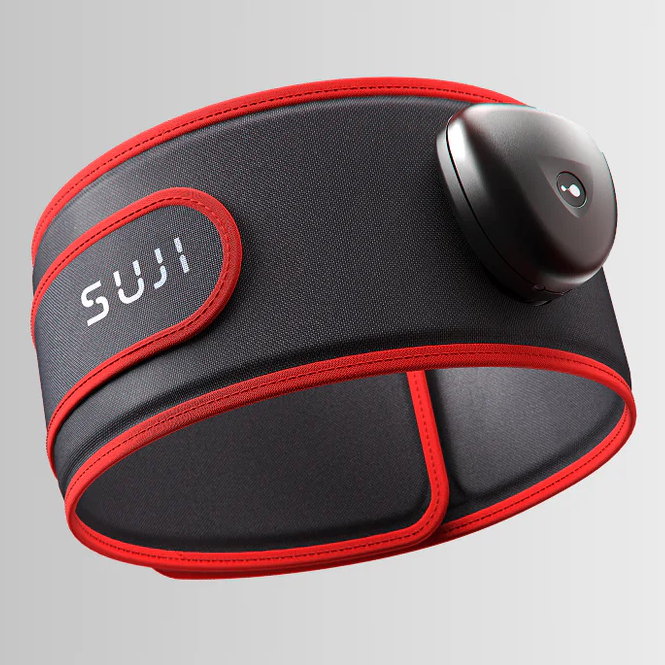
The Suji BFR cuffs are the newest model that I have tried, and wow, was I impressed. Along with the SmartCuffs, these are some of my current favorites.
The cuffs feel great, are very durable, and are easy to clean. The pump is fast and can inflate both cuffs at once.
It also comes with a free app that healthcare professionals can use to create accounts for each patient and save their custom settings. The app makes it super easy to automatically calibrate limb occlusion pressure and start using it quickly. Plus, it can be used for recovery with ischemic compression.
There’s a lot to like about these cuffs, and our patients and athletes really like them. The one thing holding me back from making this my top recommendation is that, every now and then, the wireless pump falls off during an exercise when someone hits it accidentally. This is a small concern and something you can easily get around.
This is one of my top picks for individual use and for healthcare or fitness professionals.
The Suji BFR Cuffs are great and one of my favorites. They feature comfortable cuffs, a fast pump, and different settings for strengthening and recovery. The app is simple to use and automates the inflation process.
This is one of my top recommendations for healthcare and fitness professionals.
Use coupon code REINOLD for 5% off.
B Strong BFR Cuffs
I’ve been using the B Strong BFR cuffs for many years. That alone tells you something about the durability of these cuffs.
B Strong makes a great cuff that is comfortable, durable, and easy to clean.
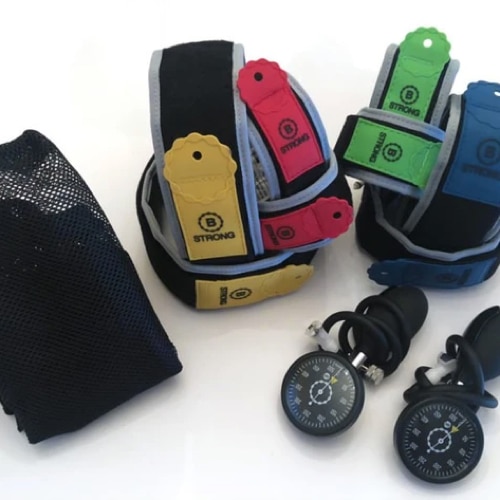
The unique feature of these cuffs is the way they inflate. Rather than just a single large bladder or air in the cuff, the B Strong cuffs have multiple air pockets. This makes the cuff really comfortable.
Because of this unique feature, it’s really hard to fully occlude the limb. This makes them a great option for those prioritizing safety during BFR training. But it also makes it hard to determine an exact limb occlusion pressure, which could be a drawback if precise occlusion measurement is important.
See my comments above. I’m starting to move away from these multi-chambered cuffs, as I think the more precision we have, the better. But for those using at home who are safety-conscious first, these are still an option.
Since these BFR cuffs do not automatically measure the pressure, you’ll also need to buy the additional BFR equipment (see below) to determine occlusion pressure, so there is a little added expense if you value that.
These bands are comfortable and have a unique design with pockets or air, making it very hard to apply too much occlusion. You will need a doppler or pulse oximeter to measure LOP%.
Use coupon code REINOLD for a discount.
Airbands BFR Cuffs
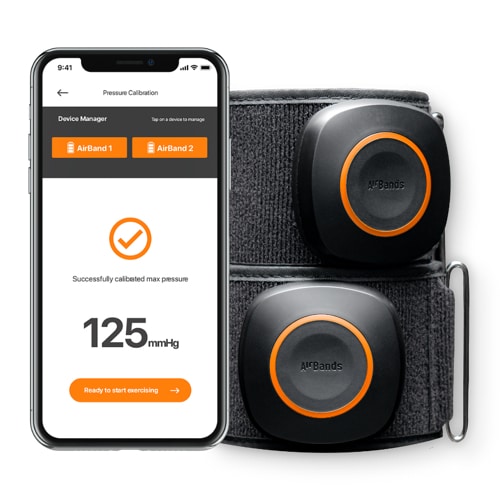
The Vald Airbands have a really unique feature that I like. Each Airband has an automatic pump built into the band, so there are no wires or external pumps.
The Airbands connect to an app on your phone to automatically inflate, measure limb occlusion pressure, and inflate to the desired pressure. That’s really cool and super easy to use.
They’re also comfortable and, so far, durable. I may be slightly worried about the long-term durability because it’s all one unit. You can’t just easily replace one band or pump if something goes wrong.
But so far, I’ve enjoyed using these and have not had any issues.
They can be used professionally, but I think this could be one of the best BFR cuffs for personal use.
AirBands are wireless and automatically calibrate and inflate based on each person, with the pump attached right to the band.
Use coupon code MIKEREINOLD for 5% off.
Edge BFR Cuffs
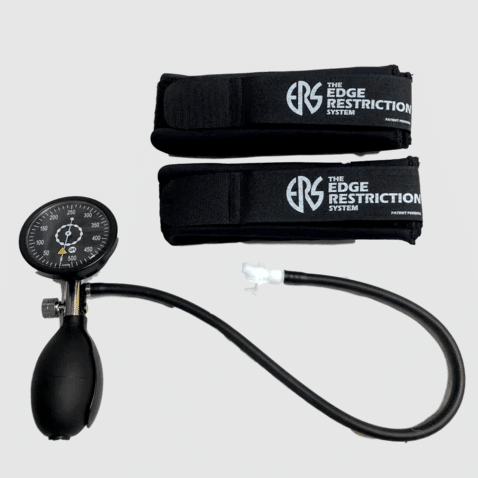
The Edge BFR Cuffs are worth checking out for those looking for a more affordable option.
These cuffs are really comfortable, built from a nice waterproof material, and come with a hand pump for manual inflation.
These are less than half the cost of many other options but have fewer features and will require you to buy some of the BFR equipment listed below to measure limb occlusion pressure accurately.
But if your budget is a concern, these are a great starting point.
For those looking for a more budget-friendly set of BFR cuffs, The Edge BFR cuffs are a great option. Their single bladder design and material are comfortable and easy to clean. You will need a doppler or pulse oximeter to measure LOP%.
Use coupon code REINOLD for 10% off.
Additional BFR Equipment
Some of the equipment above has everything you need to inflate, measure pressure, and determine an accurate limb occlusion pressure. That makes them convenient options.
But if you have other BFR cuffs that don’t measure pressure, you can still buy additional BFR equipment to do this.
Two options include a handheld Doppler ultrasound or a finger pulse oximeter.
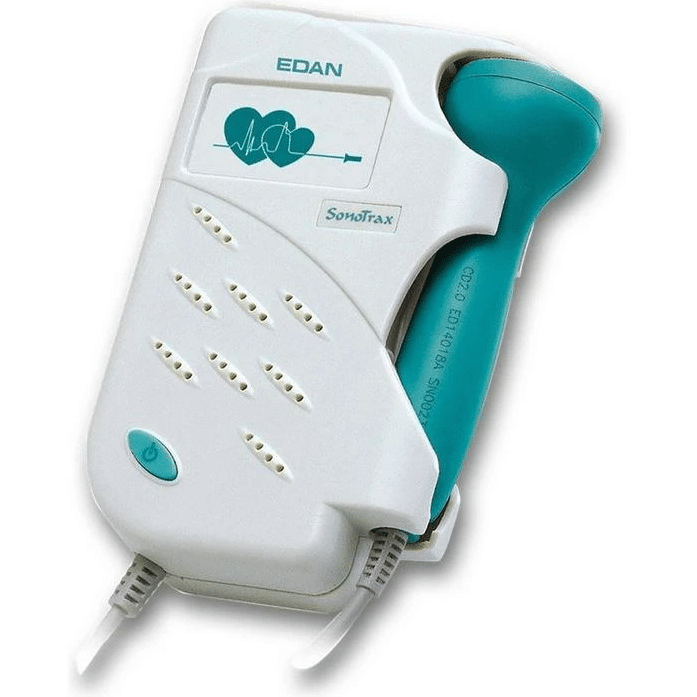
The handheld Doppler ultrasound is an accurate way to measure the distal pulse while inflating the cuffs. This is fast and accurate, though it typically costs a little over $100.
An affordable and easy-to-use ultrasound unit to determine limb occlusion pressure when using blood flow restriction training.
Use coupon code REINOLD to save 10%.
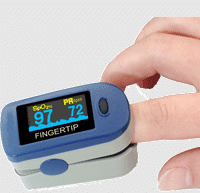
Lately, I’ve been playing with a simple finger pulse oximeter to do the same thing at a much lower price point. You do need to be careful. Most pulse oximeters you find online do not provide continuous readings, so they do not work for BFR training.
But the below model should work. It’s a little slower in response and likely less accurate than a handheld Doppler, but again, if budget is your primary concern, I’d be OK with going this route.
While not as fast or accurate as a doppler unit, a finger pulse oximeter unit is a cheaper and easier alternative to determine limb occlusion pressure when using blood flow restriction training.
Use coupon code REINOLD to save 10%.
The Best BFR Cuffs and Equipment
There you go, that’s my list of some of my favorite BFR cuffs and tools to use to perform blood flow restriction training.
There are many options to choose from depending on your needs and budget, so with all these high-quality tools available, there’s no reason not to start using BFR.
I’m sure there are other great tools out there, but you can’t go wrong with any of the BFR equipment above.
Learn More About Blood Flow Restriction Training
For those who want to learn even more, my friend Dan Lorenz and I have a comprehensive online course teaching you how to get started with blood flow restriction training.
We cover the history, science, application, and many ways we use BFR for injury rehabilitation, training, and recovery. Plus, we go into much more detail on how to choose the best BFR cuffs.
- Learn more about my online blood flow restriction training course